
 Australia
  Canada
  Ireland
  New Zealand
  Philippines
  South Africa
  United States
Renaissance art is one of the most celebrated and transformative periods in art history. Emerging in 14th-century Italy and flourishing into the 17th century across Europe, it marked the rebirth of classical ideals, combining innovation with a deep reverence for ancient Greek and Roman culture. This movement transformed the way art was created, seen, and understood, leaving an indelible mark on Western culture.
In this guide, we’ll explore the origins, characteristics, and lasting impact of Renaissance art, offering a glimpse into its genius while encouraging deeper exploration through structured learning.
The Renaissance, meaning “rebirth,” emerged during the transition from the Middle Ages to modernity, predominantly in Italy. This transformative period was marked by cultural and economic renewal, driven by the prosperity of influential city-states like Florence, Venice, and Rome.
As feudal systems declined, urban centres flourished, creating new opportunities for patronage and artistic expression. At the heart of this era was humanism, an intellectual movement inspired by classical texts. Humanism emphasised individual achievement and the pursuit of knowledge, encouraging artists to study subjects like anatomy, geometry, and the natural world.
This cultural revival sought to harmonise religious devotion with secular themes, blending spirituality with worldly exploration. The convergence of these factors created a fertile ground for artistic innovation, shaping the Renaissance into one of the most dynamic periods in art history.
Renaissance art is renowned for its commitment to realism and innovation, setting it apart from earlier artistic traditions.
Artists aimed to depict subjects with lifelike accuracy, focusing on detailed anatomy, dynamic movement, and natural expressions. This marked a departure from the more stylised forms of medieval art.
The development of linear perspective revolutionised the depiction of space, allowing for three-dimensional realism on two-dimensional surfaces. Careful attention to proportion and scale brought harmony and balance to compositions.
Inspired by ancient Greek and Roman art, Renaissance artists incorporated classical mythology, architecture, and humanist ideals into their work. This fusion of classical elements with contemporary innovation created a timeless aesthetic.
These defining traits made Renaissance art a benchmark for artistic excellence, influencing generations of creators.
The Renaissance era produced some of the most celebrated artists in history, whose works continue to captivate audiences worldwide:
A polymath whose masterpieces, like The Last Supper and Mona Lisa, epitomise the era’s intellectual and artistic achievements.
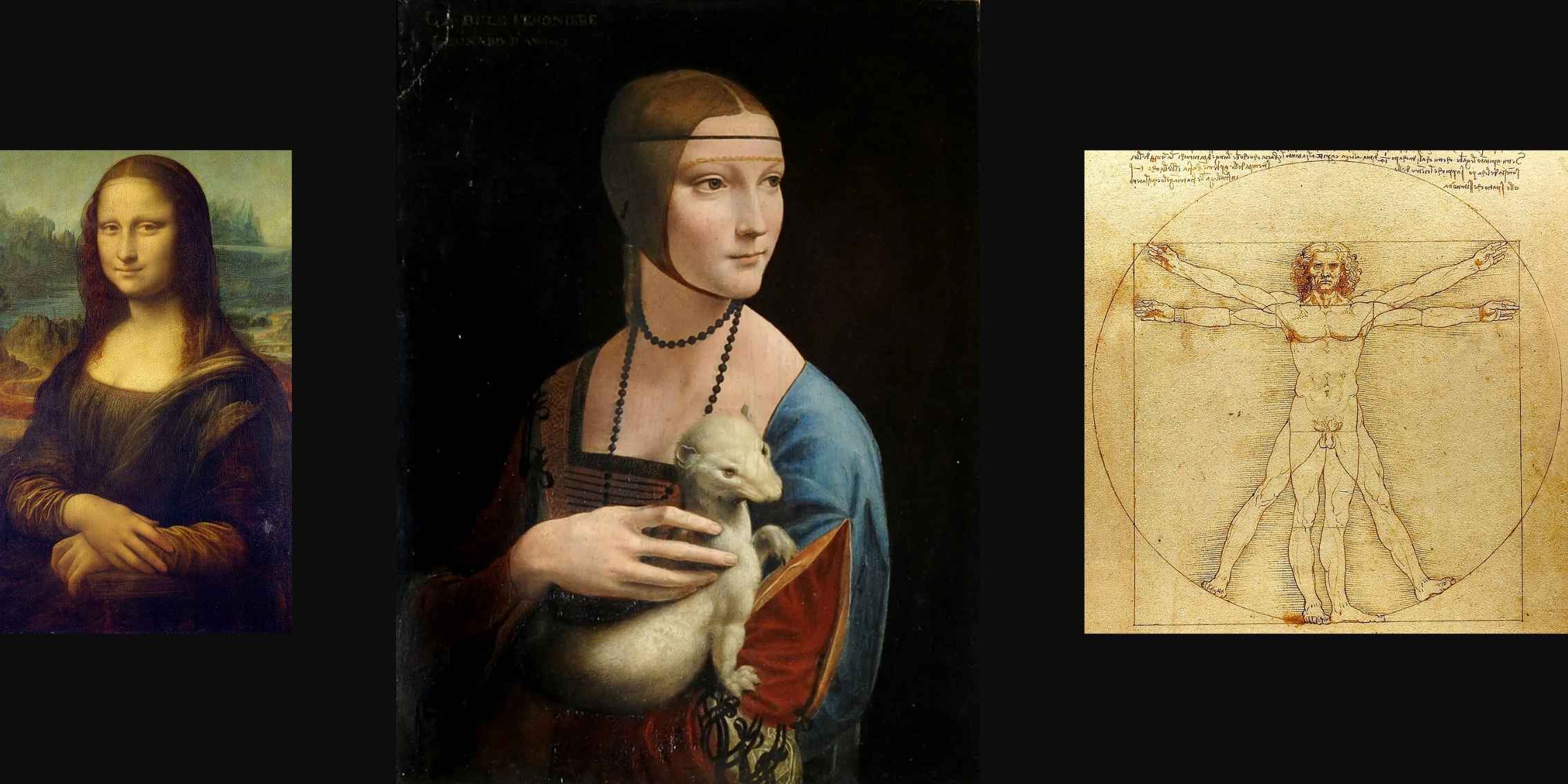
Image Source (left to right): WikiArt, Leonardodavinci.net, SmartHistory.
Renowned for his sculpture David and his awe-inspiring frescoes on the Sistine Chapel ceiling, Michelangelo’s work embodies both technical skill and emotional depth.
Celebrated for his harmonious compositions, such as The School of Athens, Raphael blended classical influences with a distinctive elegance.
Other notable figures, including Titian and Botticelli, further enriched the Renaissance with their unique contributions, leaving an indelible mark on art history.
Several masterpieces from the Renaissance have become iconic symbols of artistic ingenuity:
Leonardo da Vinci’s enigmatic portrait is famed for its use of sfumato, a technique that creates soft transitions between colours and tones, enhancing its lifelike quality.
Michelangelo’s epic frescoes depict scenes from Genesis, showcasing his unparalleled mastery of anatomy and composition.
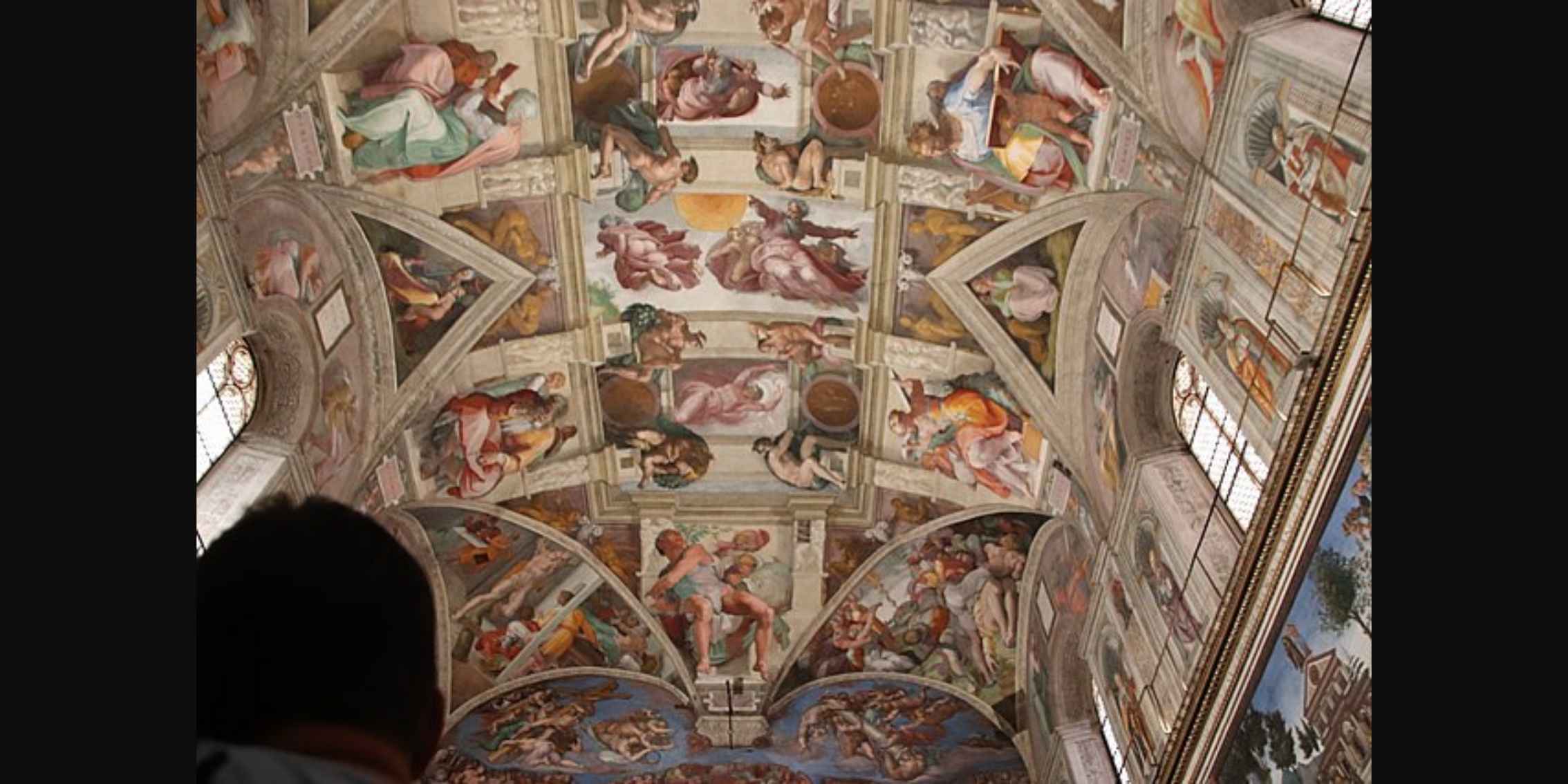
Image Source: SmartHistory.
Raphael’s fresco celebrates intellectual achievement by featuring renowned philosophers and scientists, symbolising the Renaissance's embrace of knowledge.
These works exemplify the Renaissance’s focus on technical precision, storytelling, and profound beauty.
The Renaissance was an era of groundbreaking artistic techniques and materials:
This innovation allowed artists to create depth and spatial accuracy, transforming flat surfaces into realistic, three-dimensional spaces.
Techniques like sfumato (soft transitions) and chiaroscuro (contrasts of light and shadow) added depth, drama, and mood to artworks.
The use of oil paint became widespread, enabling greater detail and vibrant colours. Fresco techniques flourished, particularly in large-scale murals.
These advancements not only elevated the quality of art but also expanded the creative possibilities for future artists.
Renaissance art explored a diverse range of themes, blending the sacred with the secular:
Biblical scenes and saints remained central, often depicted with newfound realism and emotional resonance.
Drawing inspiration from classical mythology, artists celebrated ancient gods, heroes, and legends in works like Botticelli’s The Birth of Venus.
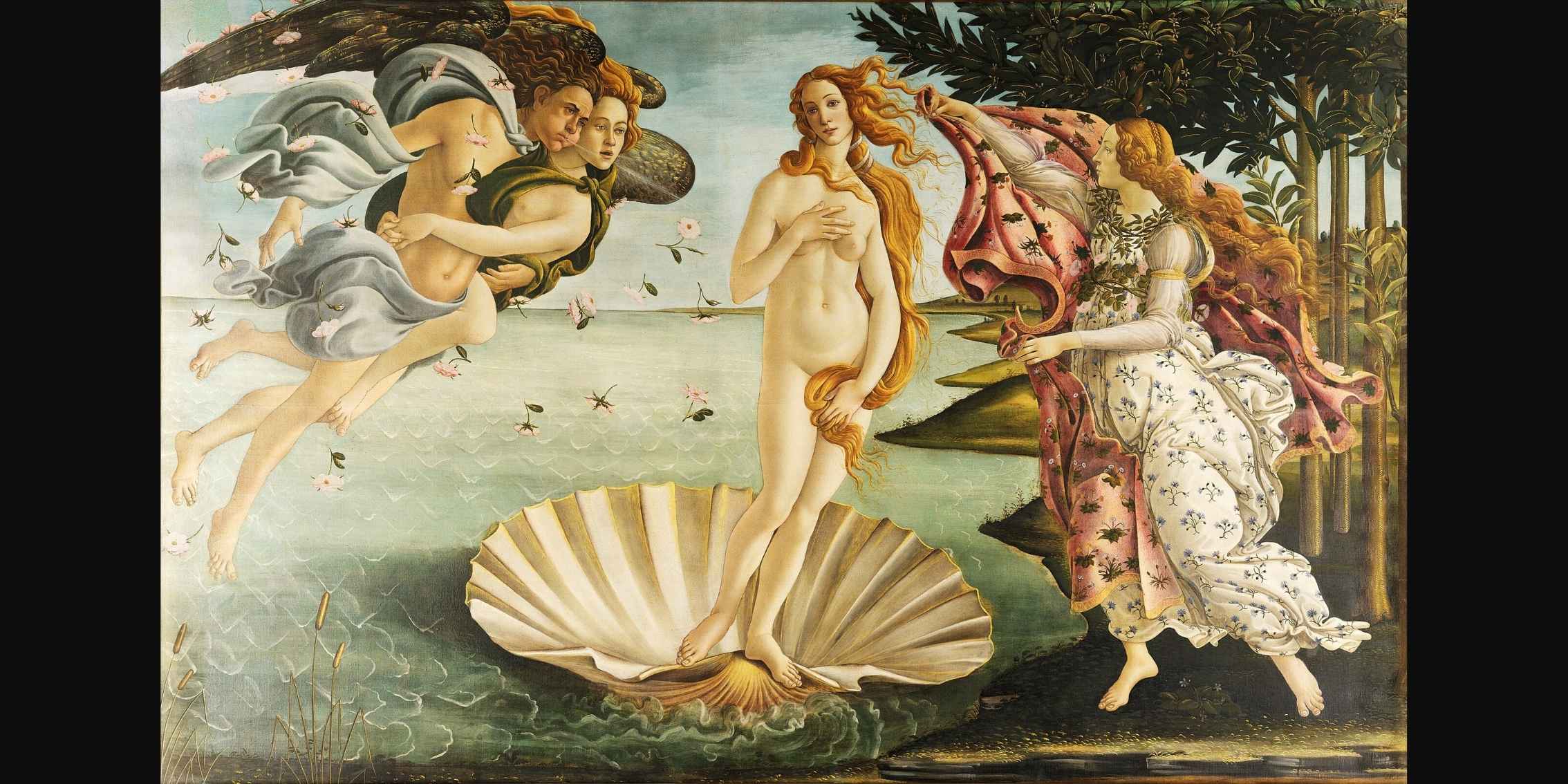
Image Source: Gallerie degli Uffizi.
Individualism flourished in the Renaissance, leading to an increased focus on capturing the likeness and character of patrons.
Backgrounds became more detailed and integral to compositions, reflecting the Renaissance's appreciation for the natural world.
These themes underscore the era’s unique ability to bridge tradition and innovation.
The Renaissance was a transformative era that reshaped the cultural and intellectual foundations of the Western world. Its ideals of realism, perspective, and harmony revolutionised art, inspiring movements like Baroque and Neoclassicism and influencing generations of artists.
Beyond art, the Renaissance advanced scientific inquiry, literature, and philosophy, with humanism emphasising individual potential and the pursuit of knowledge. These principles continue to resonate in modern society, shaping how we view creativity and intellectual achievement.
Even today, Renaissance masterpieces by da Vinci, Michelangelo, and Raphael remain celebrated worldwide, influencing modern design, film, and digital art. The era’s enduring legacy highlights the timeless power of creativity to inspire innovation and bridge the past with the future.
Understanding Renaissance art is about more than admiring its beauty—it’s a deep dive into the cultural, historical, and intellectual movements that shaped one of history's most transformative eras.
At The Art Institute, our comprehensive online art history course offers an in-depth exploration of Renaissance art, from its historical context to its groundbreaking techniques and enduring legacy. With expert guidance and engaging lessons, you’ll develop a richer appreciation of the era's masterpieces and the knowledge to analyse its impact on modern art and culture.
Enrol today to embark on your journey through the rebirth of classical culture and discover the timeless artistry of the Renaissance!
This post was created by the team at The Art Institute and supported by our team of professional expert tutors. Meet Libby Anson, one of our expert student guides below:

Tutor at The Art Institute
Libby is a writer, artist, creative and professional development coach and lecturer. She studied Fine Art at the University of Newcastle-Upon-Tyne before undertaking postgraduate Art Gallery & Museum Studies at Manchester University.
Published:






©2026 The Art Institute. All rights reserved.