Module 11: Contemporary Art from 1980
Module 11: Contemporary Art from 1980
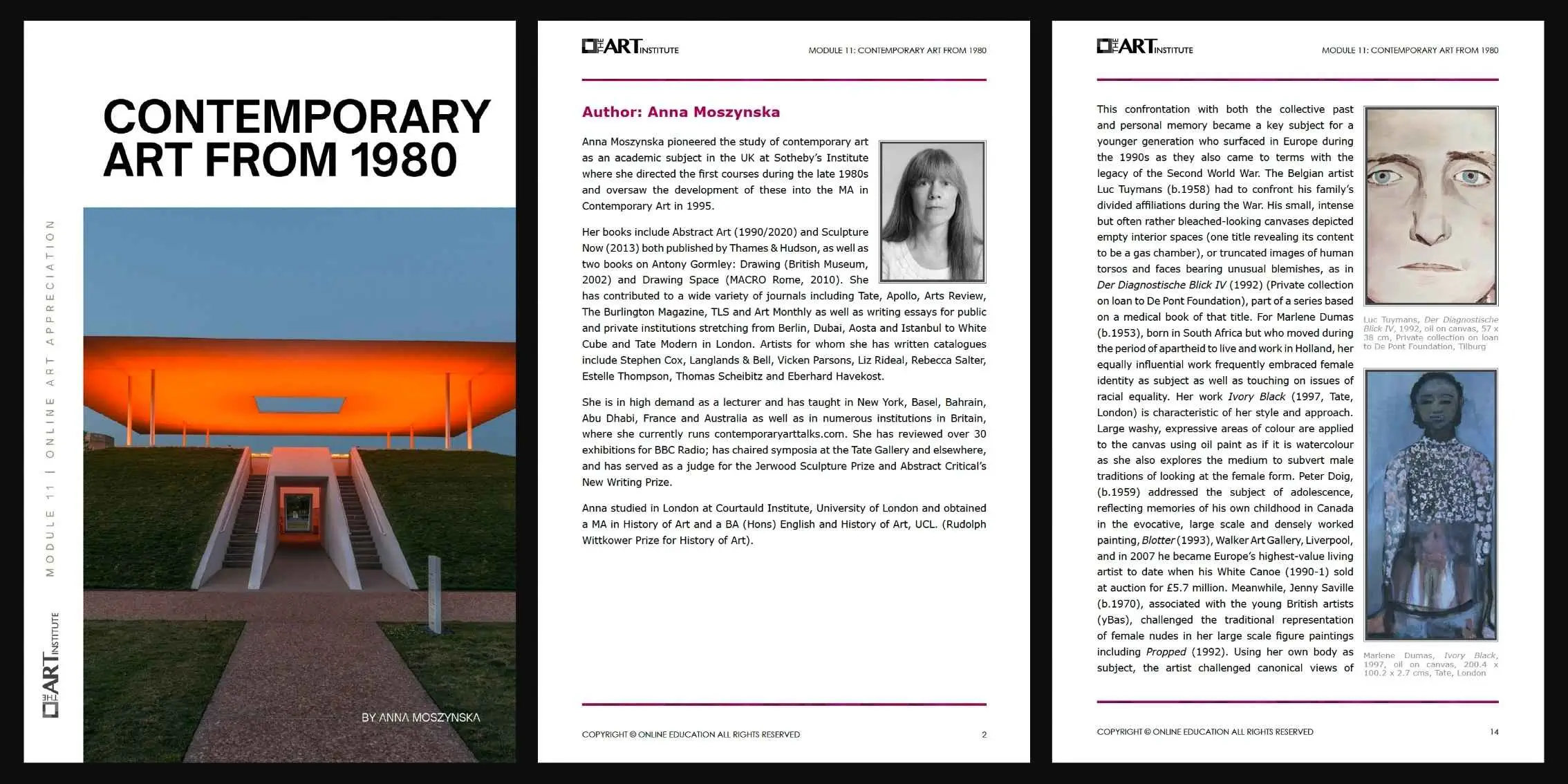
This module investigates art from 1980 to the present — a dynamic period defined by technological change, globalization, shifting social paradigms and evolving ideas about what art can be. You will explore how artists respond to contemporary issues, experiment with new media and materials (film, video, digital, installation, performance), and challenge traditional definitions of art.
Why This Module Matters
Contemporary art reflects our time more directly than almost any preceding era. Understanding this module will help you recognize how art responds to globalization, technology, ecology, identity politics and social change — and why works in new media or non‑traditional formats are as valid and meaningful as classical painting or sculpture.
- Recognize how developments in technology and globalization reshape what art can be — from installation to digital, performance to social practice.
- See how contemporary concerns (environment, identity, politics, globalization, social justice) influence subject matter and form in art.
- Develop analytical skills to analyze artworks in their full complexity — medium, context, intent, and impact.
By the end of Module 11, you will be equipped to engage with contemporary artworks thoughtfully and critically, appreciating their relevance and challenging your preconceptions about art’s form and function.
What You’ll Learn
-
New Media & Technology in Art
How film, video, digital, and installation media expand artistic possibilities.
-
Ecology, Identity & Global Concerns
How environment, identity, globalization, and politics shape contemporary art.
-
Installation, Sculpture & Public Art
Works engaging space, audience, and context — beyond traditional galleries.
-
Art as Social Practice & Conceptual Work
How art serves as commentary, activism, collaboration, or critical reflection.

What You’ll Do
- Analyze Contemporary Works
Analyze new media artworks to understand their structure, medium, and message.
- Compare Approaches
Compare traditional & contemporary art to see how form, context, & concept shape meaning.
- Contextualize in Global & Social Context
See how globalization, politics, environment, & identity shape contemporary art.
- Reflect on Art’s Role Today
See how contemporary art challenges conventions, audience, and impact.
Module Content
This module covers the following topics:
- Introduction
- The Contested Role of Painting
- Appropriation Art
- Sculpture and the Public Realm
- The Rise of Installation
- Photography and Art
- Technology: Moving‑Image Art
- Ecology and the Body
- Global Concerns
- Art as Social Practice
Module Outcomes
By completing Module 11, you will:
- Understand the defining possibilities and challenges of contemporary art from 1980 onwards.
- Be able to analyze works across media and formats — painting, video, installation, performance, conceptual.
- Recognize how globalization, technology, ecology, identity and social change shape modern artistic expression.
- Develop confidence in engaging with contemporary art — interpreting it, critiquing it, and appreciating its relevance for today.
Guidance Every Step of the Way
Our expert tutors provide Module 11‑specific guidance: helping you analyze contemporary works, contextualize them within their historical, social and globalization frameworks, and recognize how evolving technology, identity issues, environment and globalization shape contemporary art. Through personalized feedback, tutors support your development of a critical eye and deepen your understanding of what art can be — expanding beyond traditional forms into the full range of modern expression.
Discover the Modules
Explore our course outline page to learn more about the other modules.
View Course Outline


 Australia
  Canada
  Ireland
  New Zealand
  Philippines
  South Africa
  United Kingdom