
 Australia
  Canada
  Ireland
  New Zealand
  Philippines
  South Africa
  United Kingdom
The Impressionist artists didn’t just paint—they sparked a revolution. Breaking from rigid academic traditions, they captured fleeting light, everyday life, and modernity with radical new techniques. This article explores how Monet, Degas, Renoir, and Pissarro transformed painting and laid the foundations of modern art—drawing on material from our Art Appreciation course and dedicated module on Impressionism and modern art history.
In short…
This exploration of Impressionist art offers a glimpse into our Art Appreciation course, including modules on Impressionism, modernism, and revolutionary art techniques.
Paris, 1870s: a city in flux. The art world was dominated by the Salon’s rigid traditions—until a daring circle of painters broke away. Monet, Degas, Renoir, and Pissarro led a collective devoted to capturing honesty, immediacy, and modern life.
Monet, synonymous with Impressionism, obsessed over light’s shifting effects. He painted outdoors, often returning to the same subject at different times of day to show transformation through light.
Degas turned his gaze to modern urban scenes—dancers, horse races, cafés. Inspired by photography, his unusual angles and candid intimacy redefined composition.
Renoir celebrated joy and warmth, painting human interaction bathed in vibrant, dappled light. His works immortalized the lively spirit of 19th-century Paris.
Mentor and “dean” of the Impressionists, Pissarro applied the movement’s principles consistently, from rural landscapes to bustling boulevards. He was the only artist to exhibit in all eight Impressionist shows.
Impressionist artists painted not just what they saw, but how they saw it. Their techniques broke with tradition and created a new visual language.
Distinct strokes replaced blended surfaces. They avoided black paint, mixing colors on canvas to create vibrant shadows. The result: shimmering light and lively effects, epitomized in Renoir’s Bal du moulin de la Galette (1876).
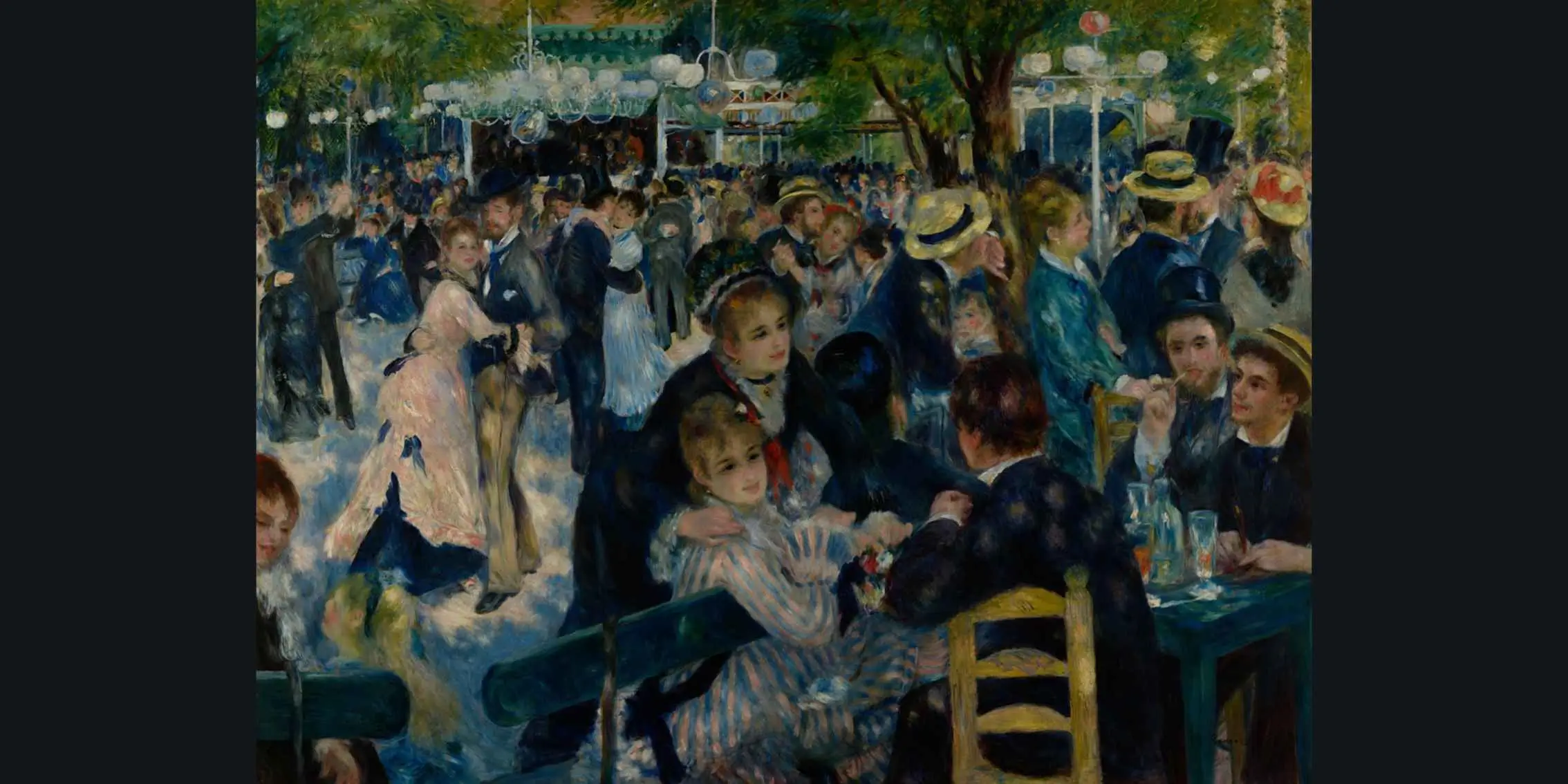
Image Source: Google Arts & Culture.
Rejecting studios, Impressionists painted outside to capture natural light and atmosphere in real time. Monet’s Impression, Rising Sun (1872) gave the movement its name.
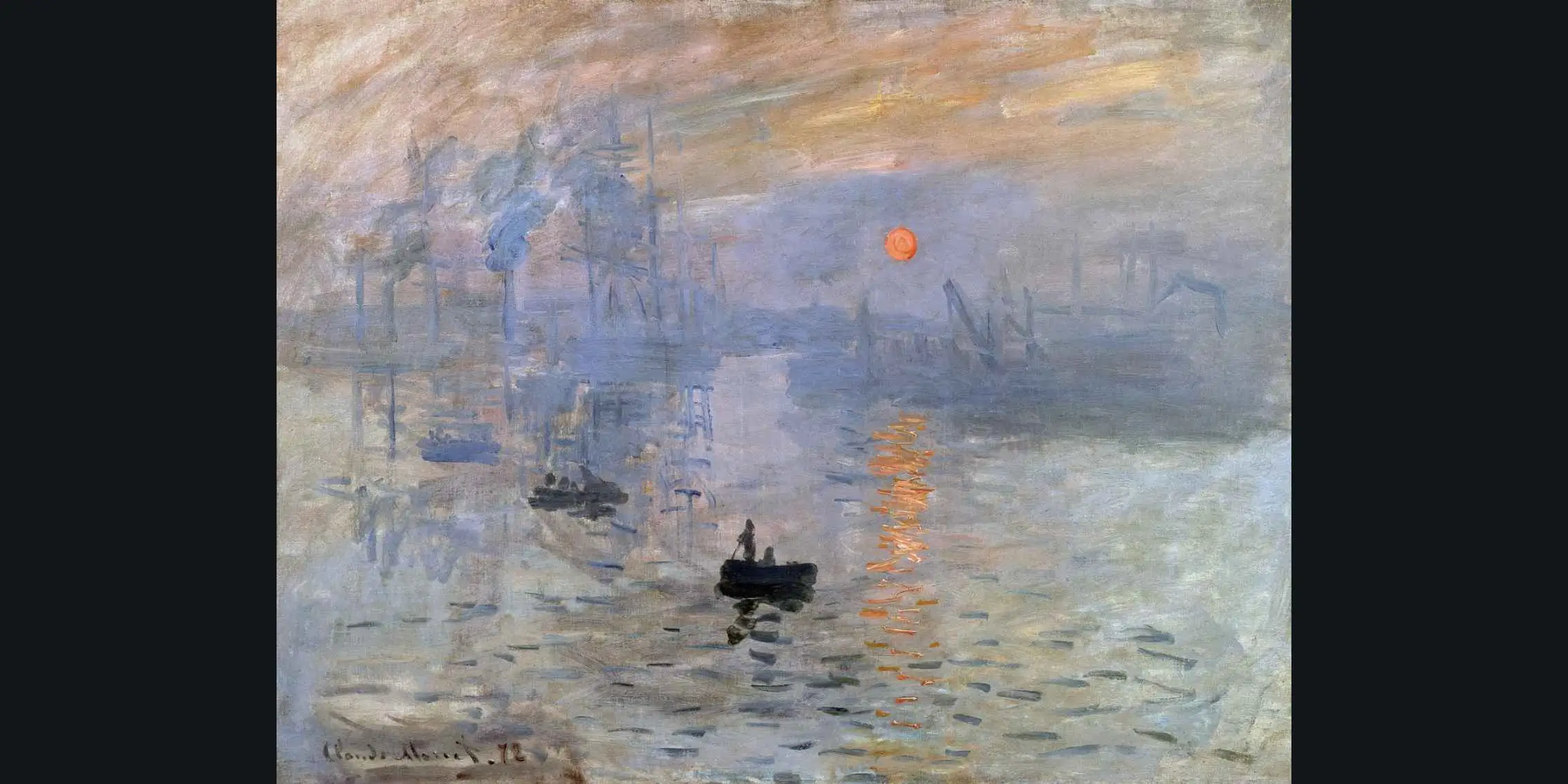
Image Source: Google Arts & Culture.
They painted the present: boulevards, leisure, cafés, and suburbia—eschewing religious or historical scenes. Degas’s The Absinthe Drinker (1859) captured candid, modern alienation.
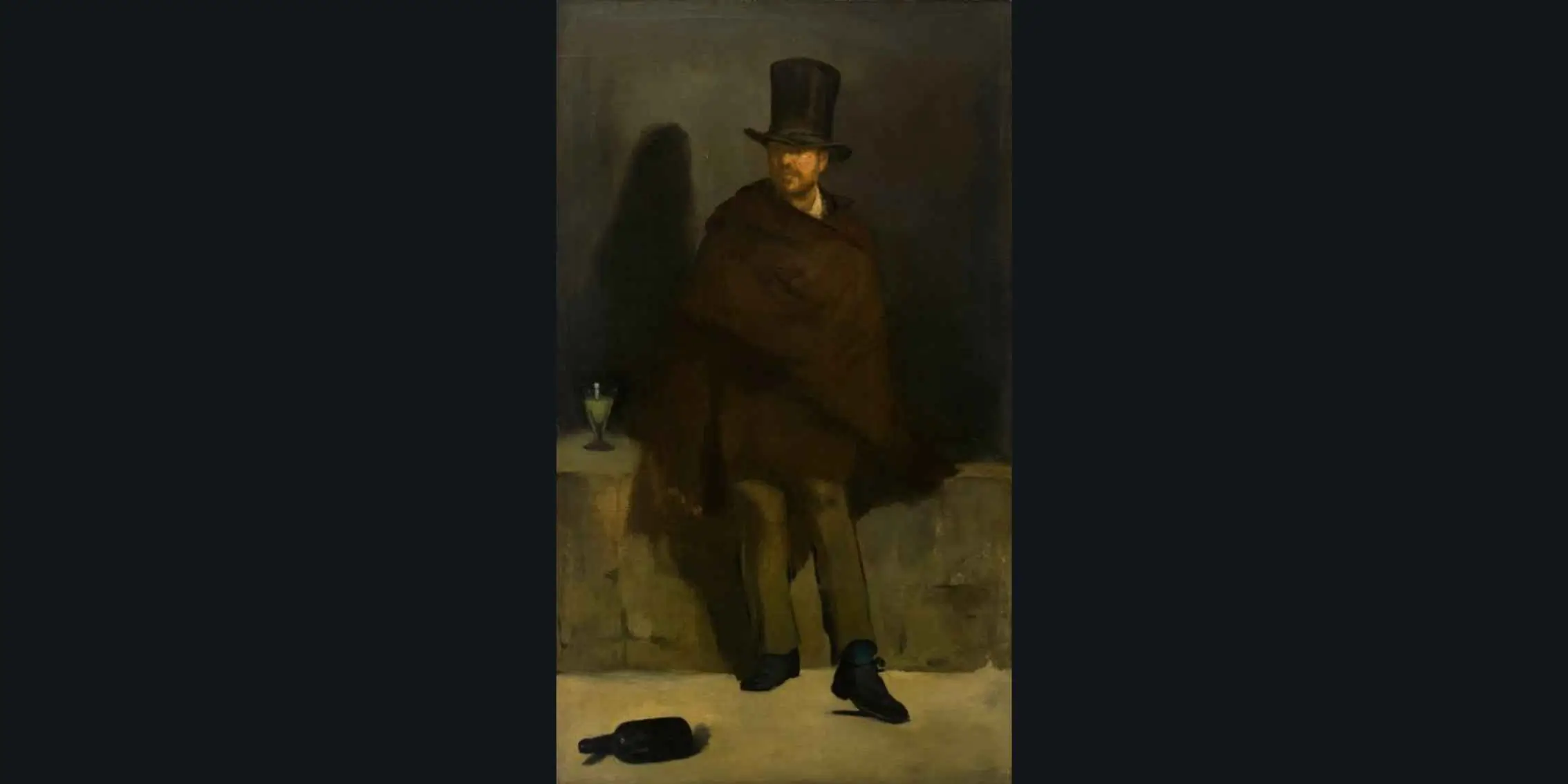
Image Source: Google Arts & Culture.
Critics derided their work as “unfinished” and “sketch-like.” But in pieces like Pissarro’s Boulevard Montmartre, Twilight (1897), atmosphere triumphed over polish.
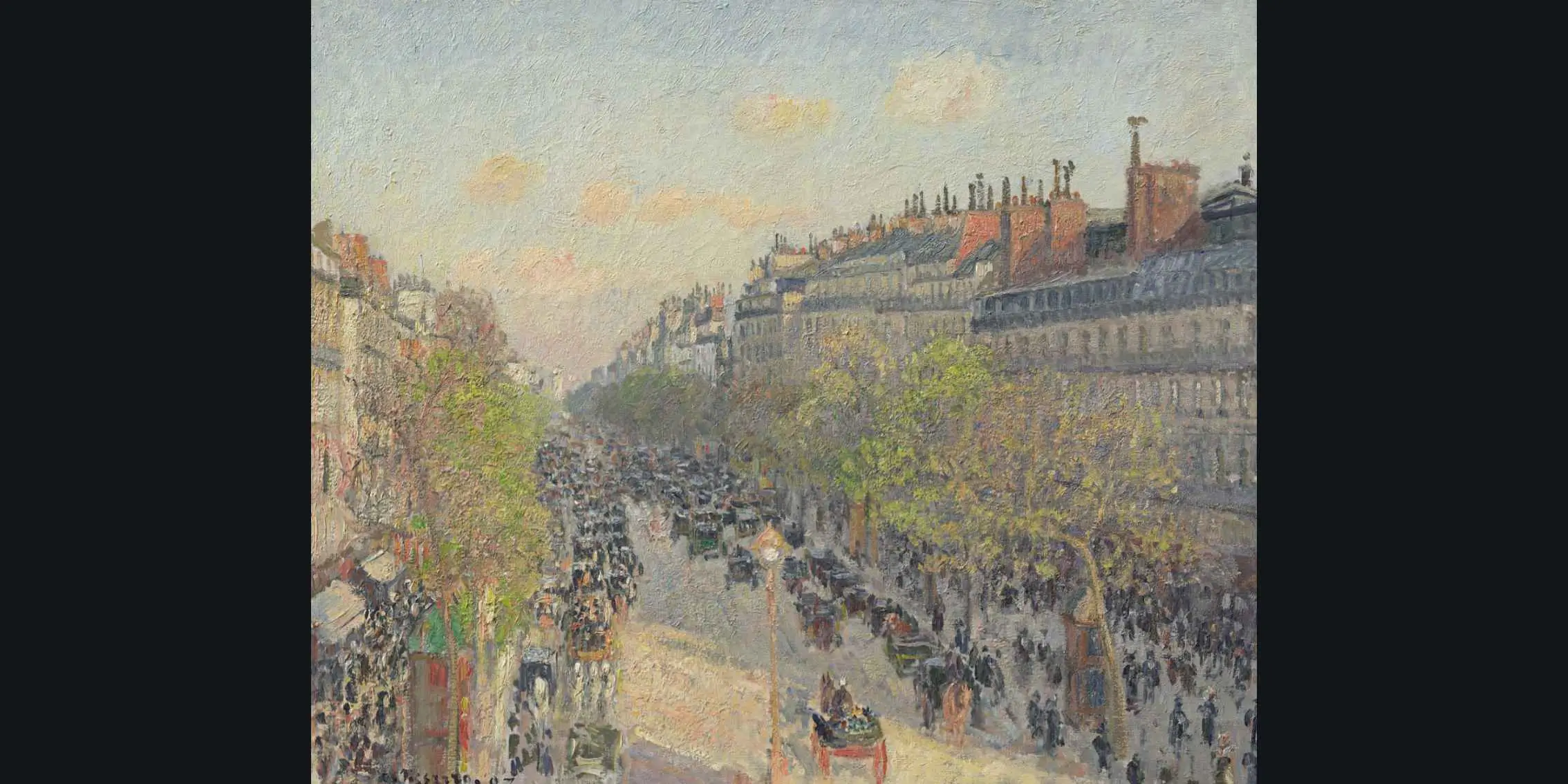
Image Source: Google Arts & Culture.
In 1874, the group staged their own exhibition. Critics scoffed at Monet’s hazy Impression, Sunrise as mere “impression.” But the insult stuck, becoming the name of a movement that would dethrone the Salon and redefine art.
By bypassing the Salon, Impressionists proved that personal perception mattered more than academic rules. As critic Edmond Duranty declared, Impressionism was “wholly modern” and capable of summing up life itself. This spirit paved the way for Post-Impressionists, Fauves, and Cubists to innovate further.
Impressionism remains beloved, filling museums like the Musée d’Orsay and National Gallery of Victoria. Its legacy resonates in David Hockney’s luminous canvases, de Kooning’s brushwork, and even photography and cinema that seek to capture fleeting light.
What was once radical is now canonical. Impressionism reminds us that art’s mission is to innovate. Explore this history—and its ongoing influence—through The Art Institute’s online courses. Self-paced study, expert tutors, and flexible payment plans await. Download your free course guide today.
This post was created by the team at The Art Institute and supported by our team of professional expert tutors. Meet Stephen Farthing, one of our expert student guides below:

Tutor at The Art Institute
Stephen is an acclaimed painter and Royal Academician whose career is defined by international exhibitions, a legacy of awards from the John Moores Liverpool Exhibitions, and prestigious leadership roles at institutions like Oxford and the University of the Arts London.
Published:






©2026 The Art Institute. All rights reserved.