
 Australia
  Canada
  New Zealand
  Philippines
  South Africa
  United Kingdom
  United States
Pablo Picasso’s Blue Period (1901–1904) remains one of the most evocative and emotionally charged phases of his career. Defined by its monochromatic palette of blues and blue-greens, this era reflects themes of poverty, isolation, and despair. While today these works are celebrated as masterpieces of modern art, at the time they revealed a young artist grappling with loss, depression, and the harsher realities of the human condition.
The Blue Period began after the tragic death of Picasso’s close friend Carlos Casagemas in 1901. The grief was overwhelming and found direct expression in his art. Abandoning the lively cabaret scenes of Paris, Picasso turned inward, producing paintings dominated by elongated figures, hollow eyes, and a sombre palette. His works from this period explore the universality of suffering, making the personal into something profoundly human and collective.
Before the Blue Period, early Picasso works such as Le Moulin de la Galette (1900) were characterised by a brighter, more optimistic palette. These works reflected the influence of Impressionism and Post-Impressionism, but they lacked the emotional intensity that would soon define his Blue Period.
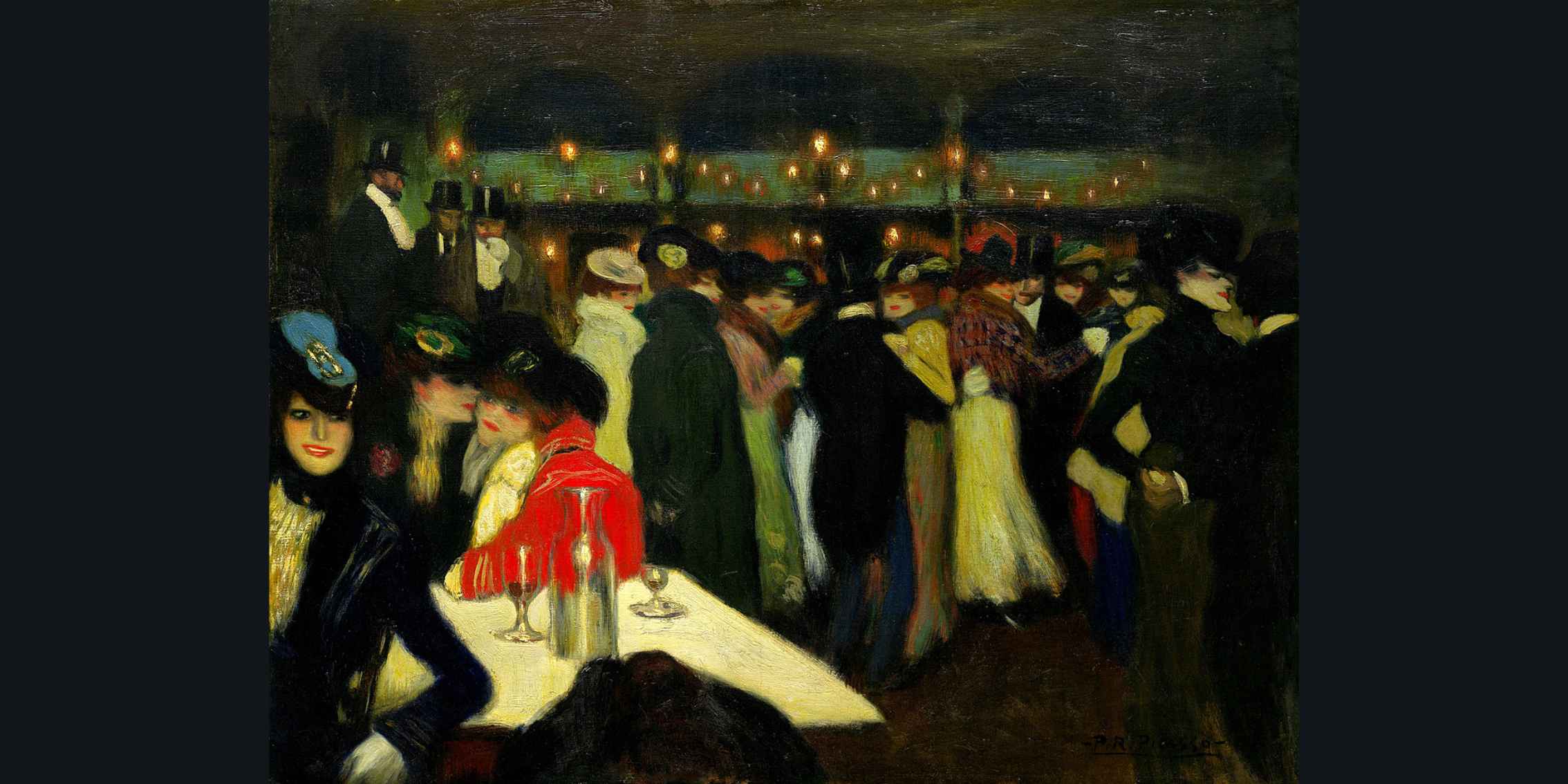
Image Source: The Guggenheim.
The most renowned Blue Period paintings are a testament to Picasso's emotional depth. Here’s how they embody the era's key themes and stylistic innovations.
In this seminal work, Picasso’s stylistic choices are inseparable from the work’s emotional impact. The elongated figure recalls El Greco, while the muted tones emphasise fragility and suffering. The contrast between the old man’s frail body and the guitar — the only object painted in warmer brown tones — suggests art as a lifeline amidst despair.
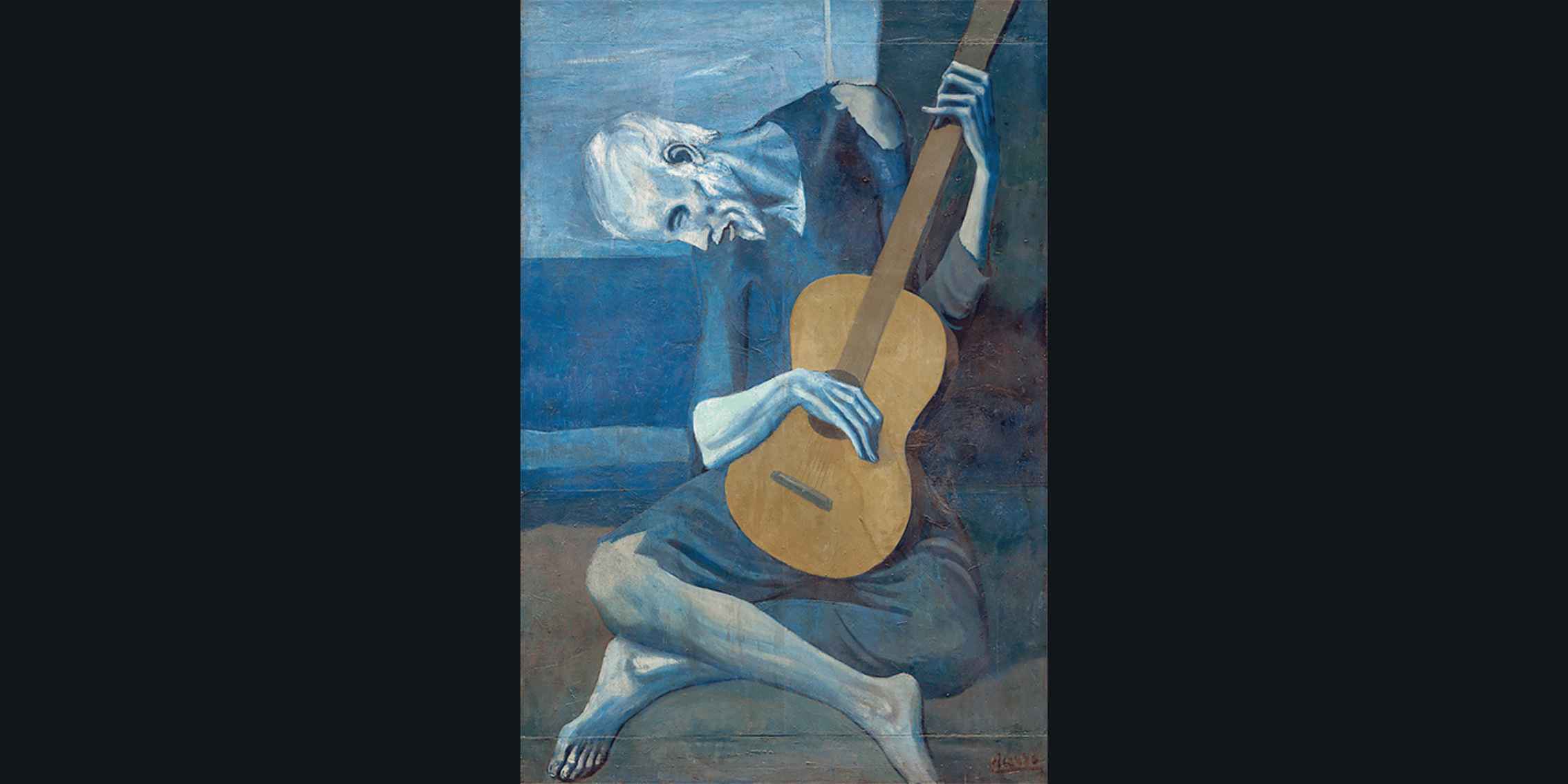
Image Source: The Art Institute Chicago.
A complex, allegorical work, La Vie presents intertwined figures whose meanings remain debated: is it about love, death, artistic creation, or all of them at once? The sombre palette and symbolic juxtapositions reflect Picasso’s personal grief while also engaging with universal human dilemmas.
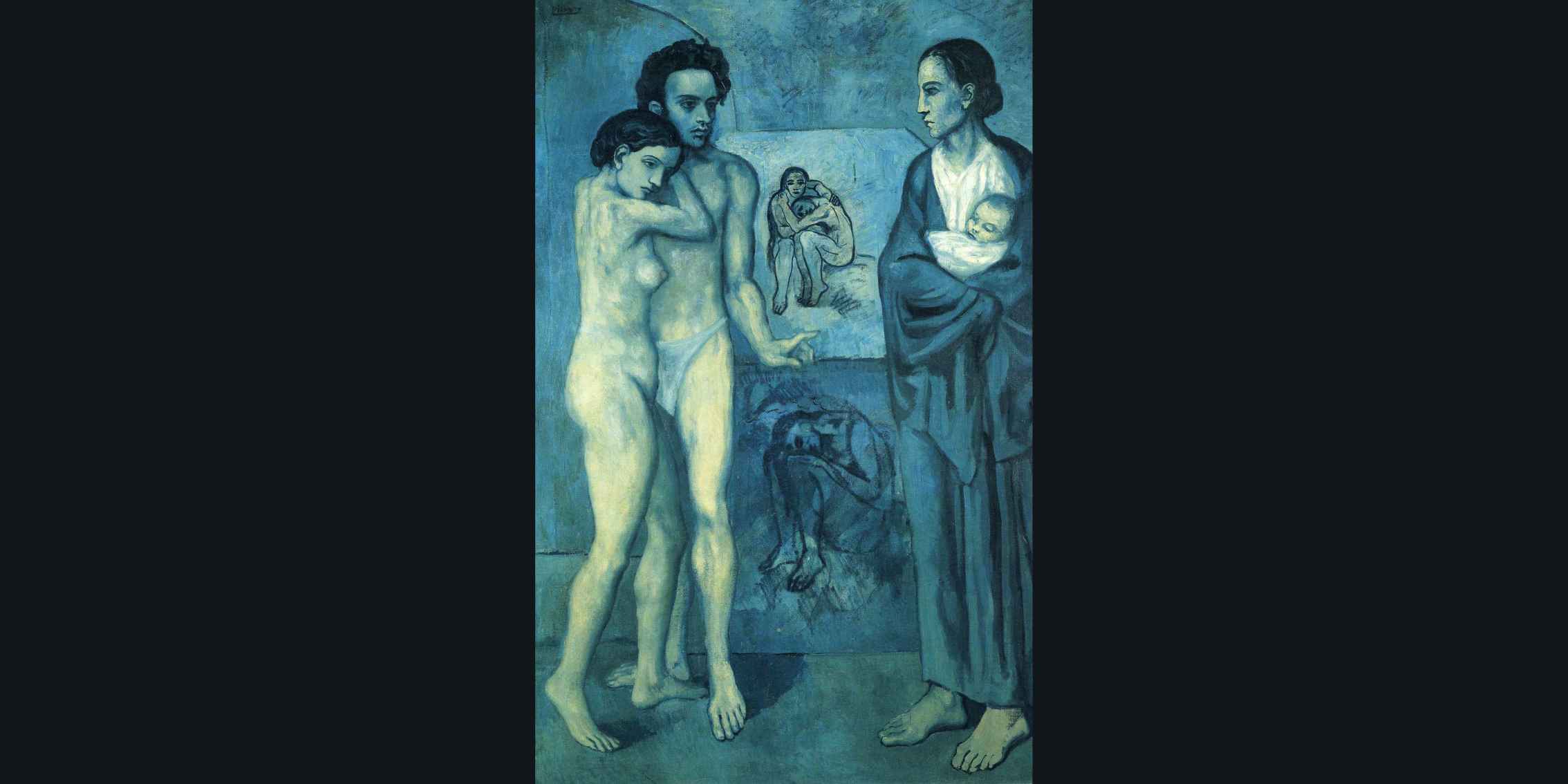
Image Source: The Cleveland Museum of Art.
In this canvas, Picasso depicts blindness not only as a physical condition but also as a metaphor for solitude and vulnerability. The sparse composition and restricted palette enhance the figure’s fragility, highlighting the dignity and tragedy of human existence.
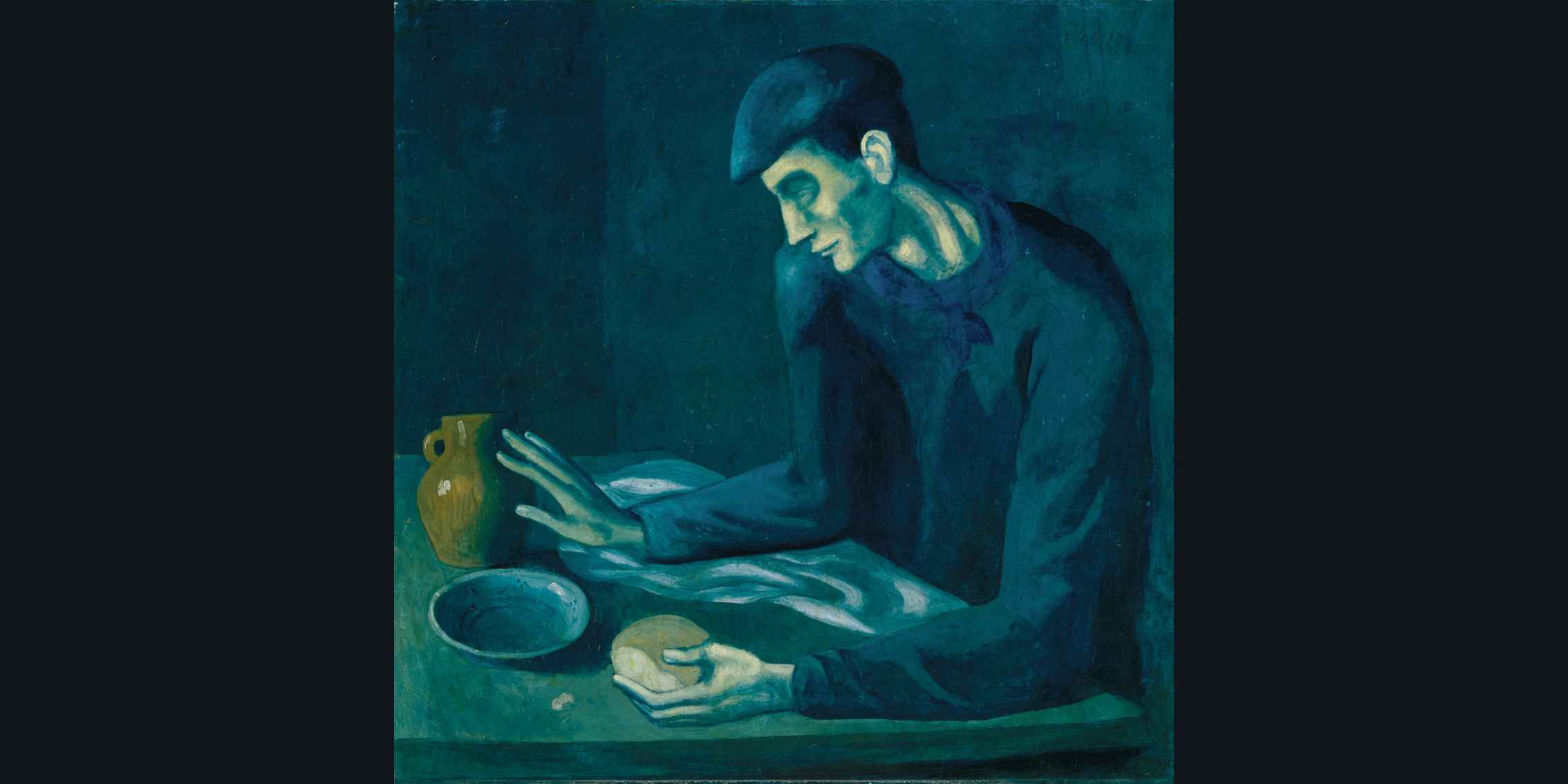
Image Source: The Met.
Although it lasted only a few years, the Blue Period had an enduring influence on Picasso’s artistic trajectory. It marked his shift from decorative, observational art toward deeply symbolic, emotionally resonant expression. These works also paved the way for his later experimentation in the Rose Period and eventually Cubism. Today, the Blue Period paintings are not only revered as masterpieces but also as raw, visual testaments to art’s power to transform suffering into beauty.
Ready to discover more of art’s rich history and what it means to you? Our online Art Appreciation course offers deep art history knowledge, flexible study, and expert tutor support. No prior experience is necessary. Download your free course guide today and begin your art journey.
This post was created by the team at The Art Institute and supported by our team of professional expert tutors. Meet Libby Anson, one of our expert student guides below:

Tutor at The Art Institute
Libby is a writer, artist, creative and professional development coach and lecturer. She studied Fine Art at the University of Newcastle-Upon-Tyne before undertaking postgraduate Art Gallery & Museum Studies at Manchester University.
Published:






©2026 The Art Institute. All rights reserved.