You don't need a blank canvas or expensive oils to create a masterpiece. Collage art proves the greatest works can arise from humble scraps like ticket stubs and newspaper clippings.
As art historian Rosalind Krauss noted, this technique shattered modernism's purity by thrusting everyday reality onto the gallery wall, making creation radically accessible.
This article traces its evolution from Cubism's fragments to Pop Art's bold imagery, equipping you with historical insights to build your own professional style and trust your creative eye.
In short…
You'll master the historical logic behind these movements in our online Art Appreciation course, where we help you build the professional knowledge you need to hack your dream art career.
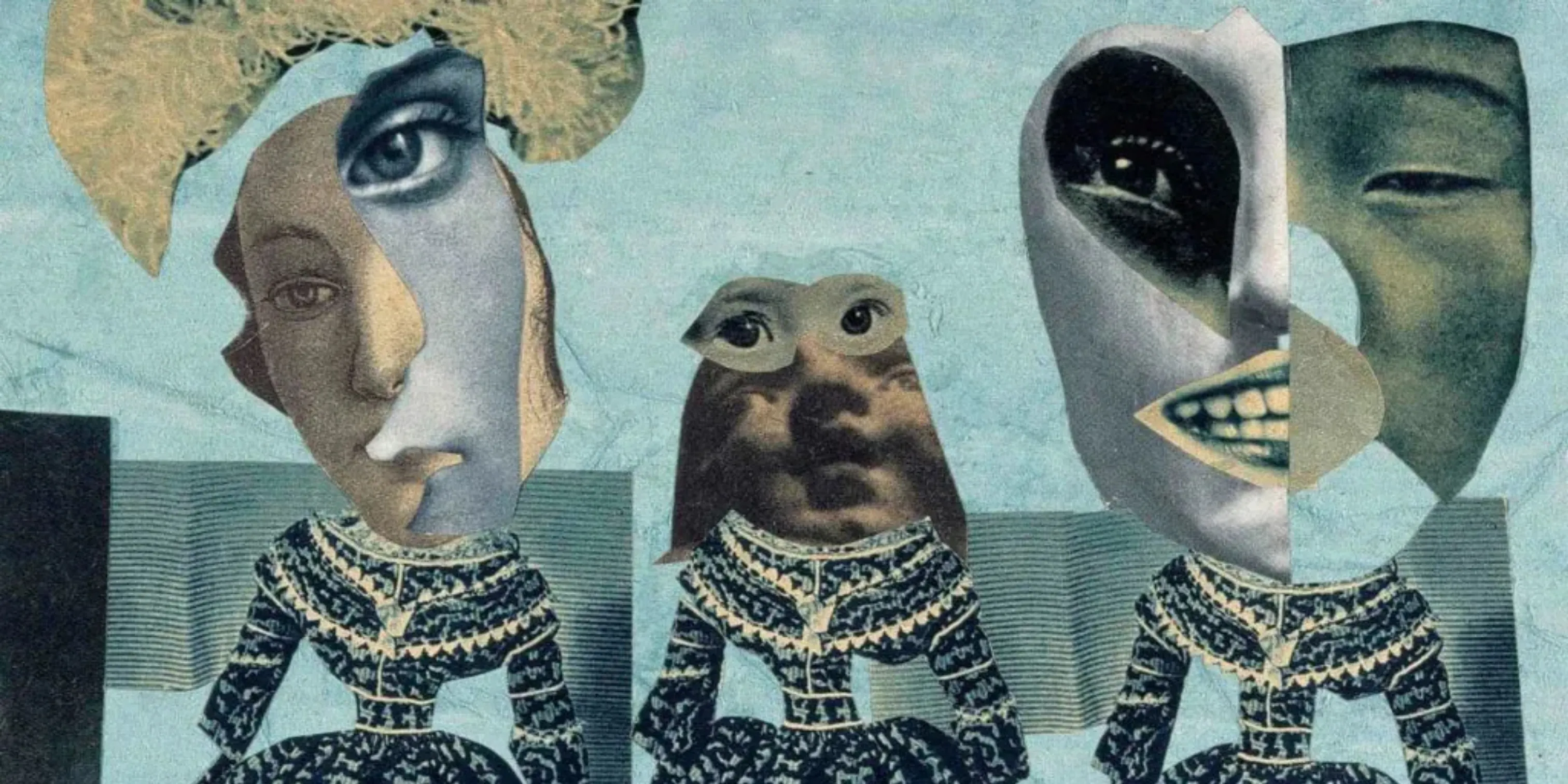 Image Source: Art History Project
Collage art is a technique where artists glue various materials like paper, photographs, and found objects onto a backing. It's all about layering textures and meanings to tell a story that a single drawing can't capture on its own.
To master this medium, artists rely on several specific methods to manipulate their materials.
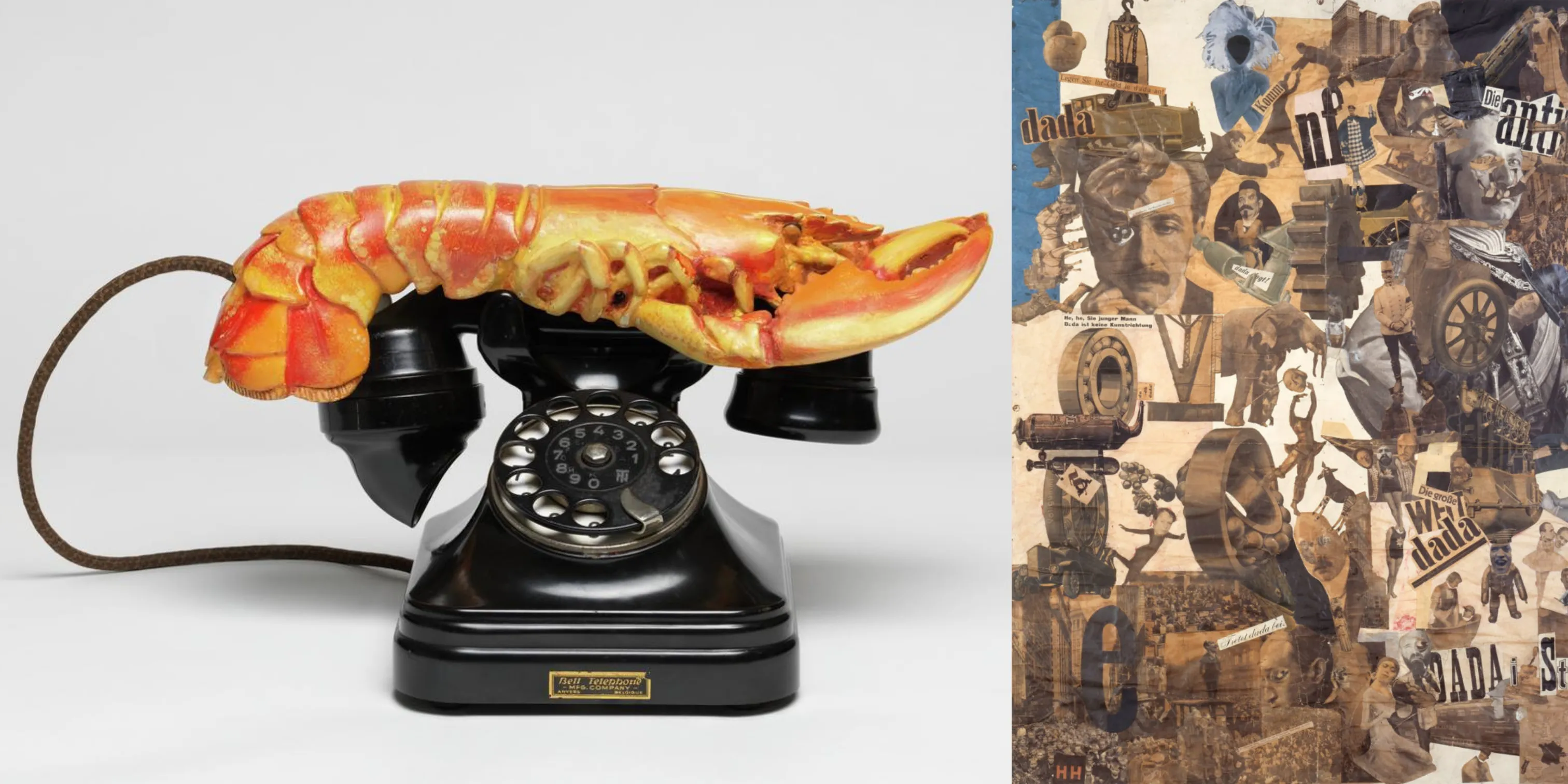 Image Source: Tate | Smart History
The history of collage stretches back much further than the 20th century. People were reassembling materials for centuries before it was considered "fine art." 12th-century Japanese calligraphers used bits of silk and paper to create textured surfaces for their poetry.
Plus, 17th-century European hobbyists mastered découpage by applying cut-outs to furniture and boxes. Even the Victorian craze for scrapbooking paved the way for the techniques we use now. These early forms were seen as decorative hobbies.
The real shift happened when modern artists realised they could use these methods to break reality apart.
Picasso and Braque started modern collage in 1912 by using newspaper to show multiple perspectives. Picasso's Still Life with Chair Caning used oilcloth and rope to mix reality with art. This move forced viewers to see the work as both a real object and a representation.
Apollinaire praised how real objects defined the limits of a painting. This mirrored the fractured nature of modern life. These artists proved you don't need to paint a texture if you can glue the real thing onto the surface.
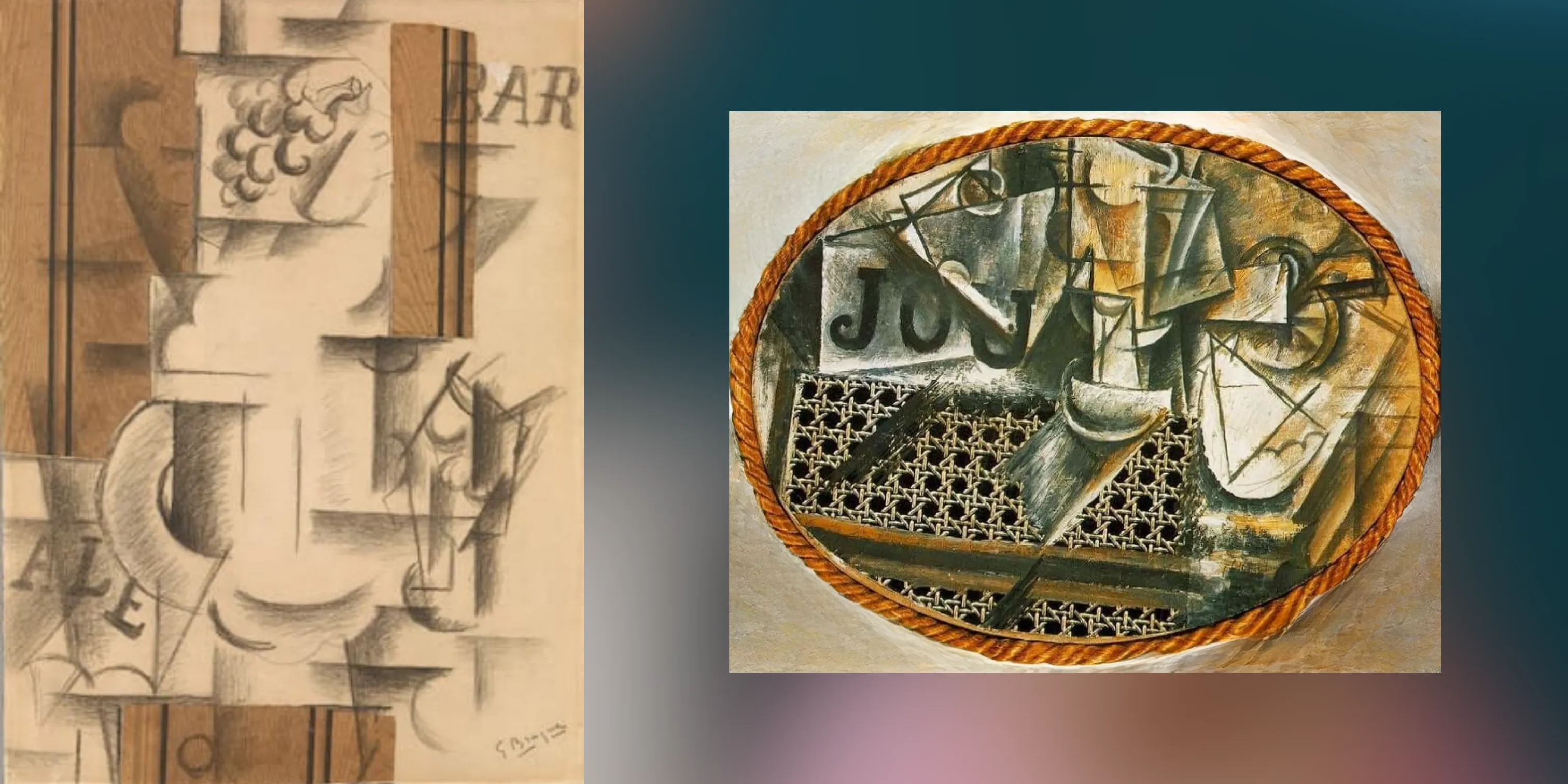 Image Source: Hyperallergic | Pablo Picasso
Dadaists used collage to protest the post-war world by rejecting traditional beauty. Max Ernst called it the noble conquest of the irrational. These creators proved collage could be both political and deeply personal.
These strange pairings helped artists tap into the subconscious. By using scraps, Kurt Schwitters showed that nothing is trash if it has a place in your composition.
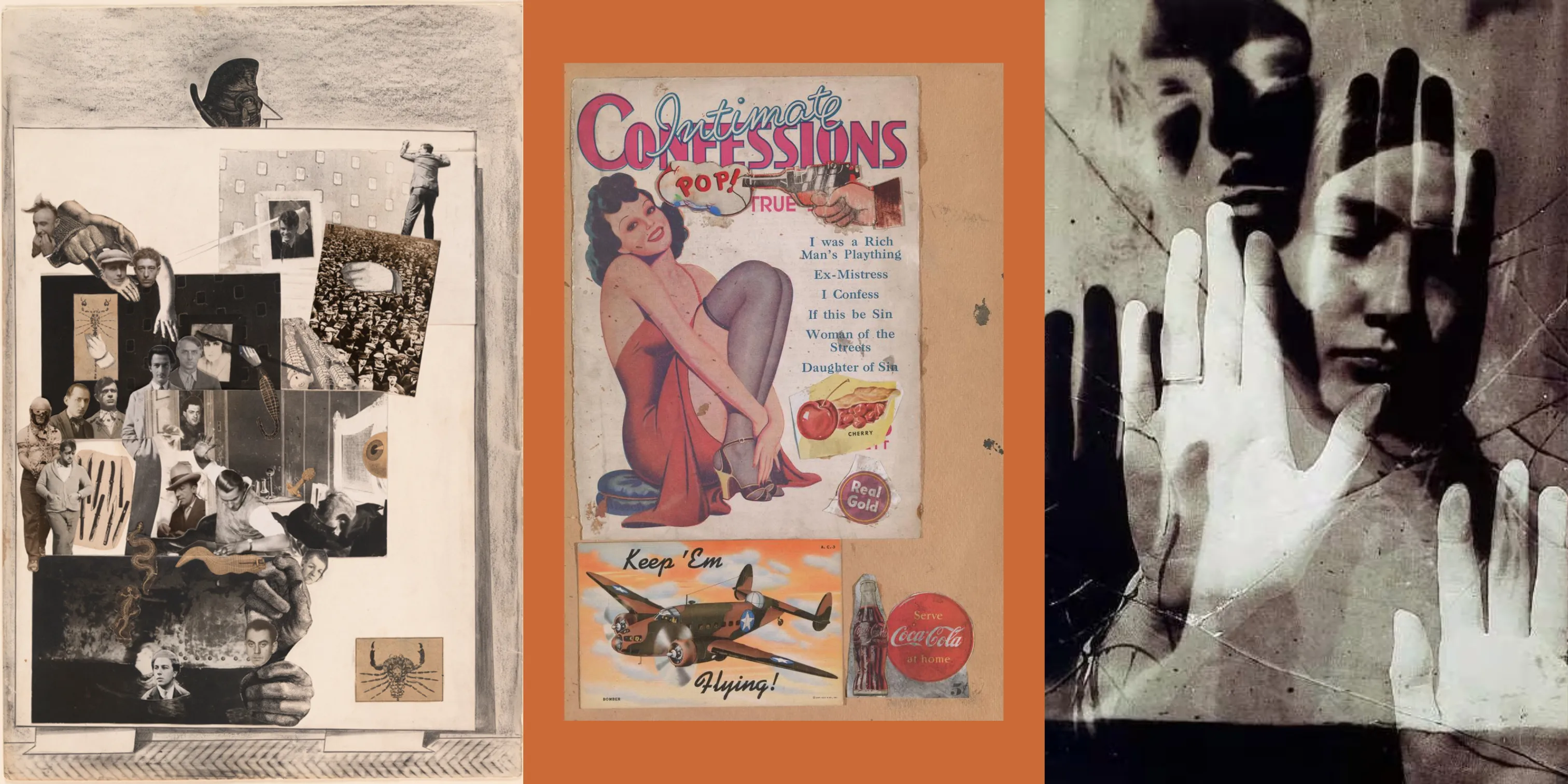 Image Source: Kolaj | Tate | AnOther
Pop Art used collage to explore consumer culture and advertising in the 1950s. Artists like Warhol used repetition to show the impact of mass production. This movement turned the remix into a global trend.
Collage became a tool for social commentary by questioning mass media. Consumer satire elevated advertisements into high art. This made collage feel accessible and commercial to everyone.
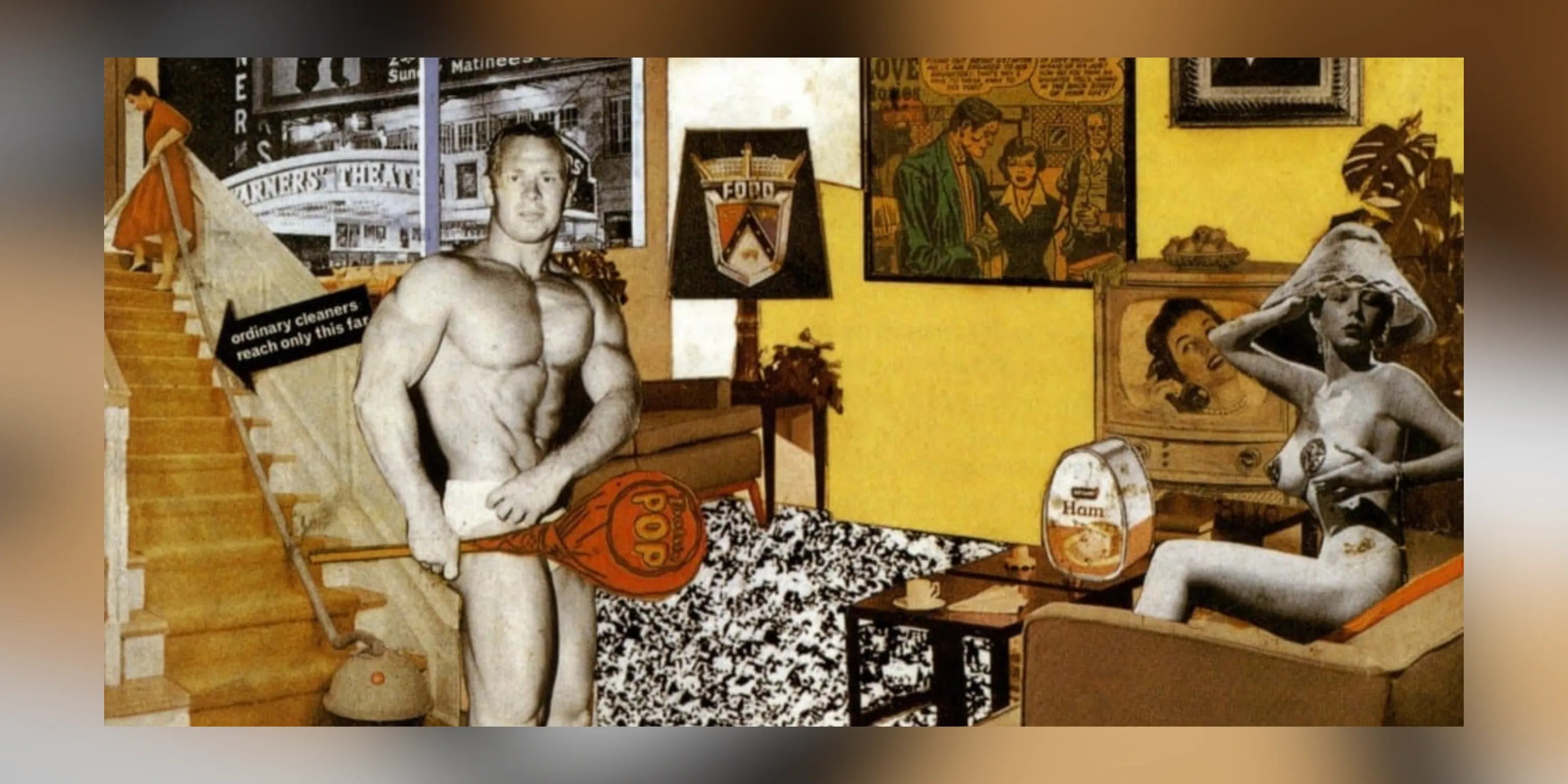 Image Source: The Indiependent
Collage has moved from radical protest into a digital language that defines today's remix culture.
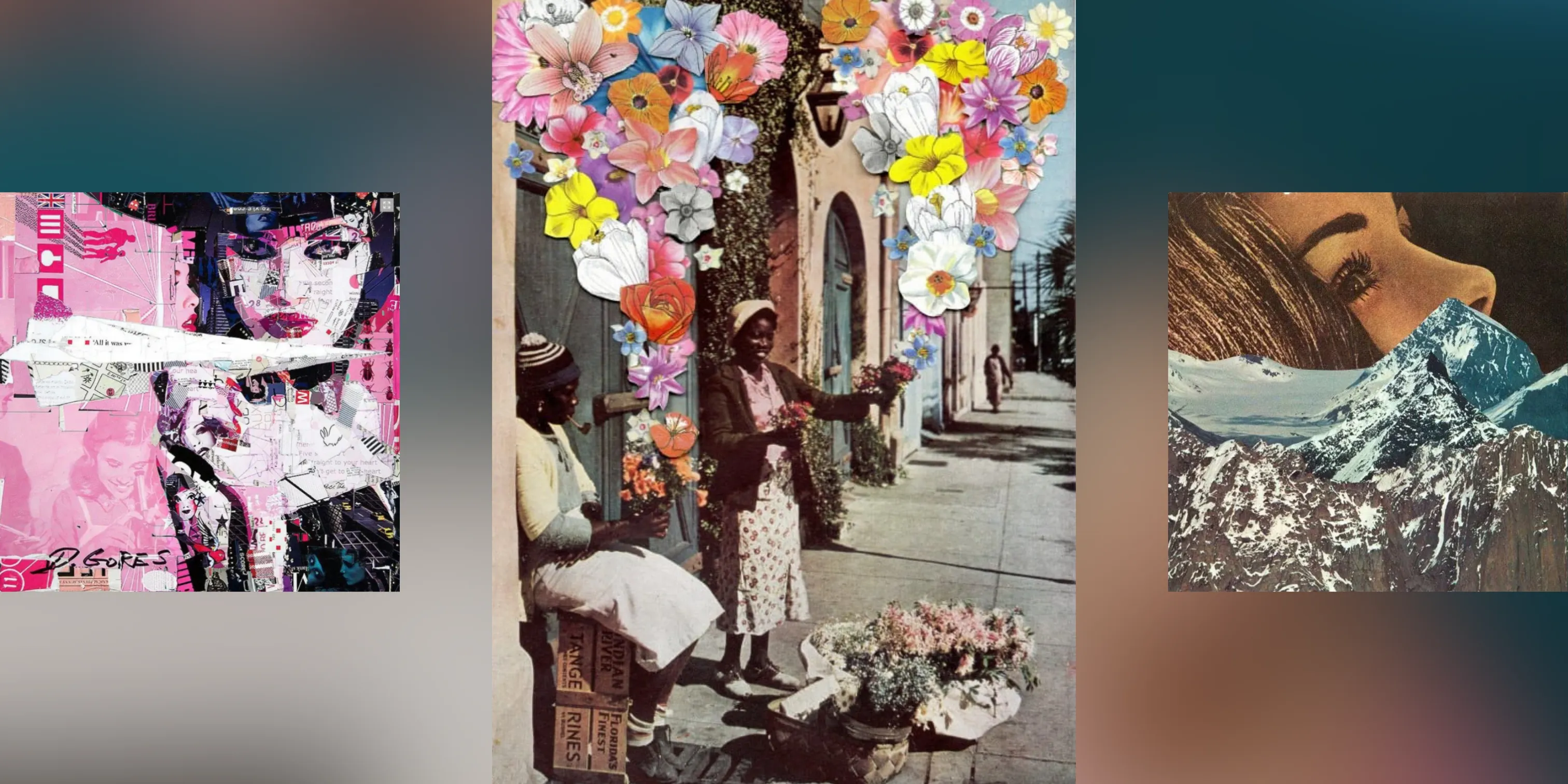 Image Source: The Arty Teacher | Quiet Lunch | AnOther
| Artist | Era (Years Active) | Core Theme | Key Work |
|---|---|---|---|
| Pablo Picasso | Cubism (1907–1920s) | Real-world invasion of the canvas | Still Life with Chair Caning (1912) – First true collage with oilcloth and rope. |
| Georges Braque | Cubism (1908–1920s) | Textures and multi-perspective | Fruit Dish and Glass (1912) – Newsprint and faux woodgrain blurring illusion/reality. |
| Hannah Höch | Dada (1916–1930s) | Political photomontage, social critique | Cut with the Kitchen Knife (1919) – Dada satire on Weimar gender/politics. |
| Kurt Schwitters | Dada/Merz (1918–1940s) | Trash-to-art, total environments | Merzbau (1923–43) – Massive assemblage from urban debris. |
| Richard Hamilton | Pop Art (1950s–1960s) | Consumerism and mass media satire | Just what is it... (1956) – Pin-ups, ads defining British Pop. |
| Robert Motherwell | Abstract Expressionism (1940s–1980s) | Emotional abstraction via layering | Elegy to the Spanish Republic series (1948–) – Paint over newsprint for raw depth. |
| Robert Rauschenberg | Neo-Dada/Pop (1950s–1970s) | Pop + 3D "combines" | Monogram (1955–59) – Stuffed goat with tire on painted canvas. |
What is the difference between collage and assemblage?
A collage is usually flat and made on a two-dimensional surface like paper or canvas. Assemblage is three-dimensional and uses found objects to create a sculpture.
What techniques did Picasso and Braque use in Cubist collages?
Picasso and Braque used paper collage art to glue newspaper and wallpaper directly onto their drawings to break reality into fragments. This changed collage art history by showing that real-world textures could replace paint to offer multiple perspectives at once.
How did the Dada movement influence collage art?
The Dada movement turned collage art into a tool for political protest by rejecting traditional beauty in favour of chaotic "anti-art." Artists used photomontage to critique society, proving that mass-produced scraps could hold as much meaning as classic paintings.
How did Surrealists like Max Ernst advance collage?
Surrealists like Max Ernst advanced the medium by using strange pairings of engravings to unlock the irrational subconscious through collage art. His work moved away from the logic of early history of collage to create dream-like scenes that felt like hallucinations.
How has collage evolved into digital and contemporary forms?
Contemporary collage art has evolved into a digital remix culture where software replaces scissors to create mixed media collage art. You can now use tablets to layer social media imagery and digital textures to define today's visual trends.
Who are some famous collage artists after the Cubist era?
Famous collage artists who pushed the medium after the Cubist era include Hannah Höch, Kurt Schwitters, and Richard Hamilton. Later masters like Robert Rauschenberg also used assemblage art to join fine art with the everyday debris of the modern world.
Understanding art history is the first step toward defining your career in the creative arts. Our online Art Appreciation course is built to help you turn your passion into real expertise. You’ll build the technical foundations and historical knowledge that make the art world click.
In Module 9, you'll explore how Cubism and Surrealism evolved as a response to mechanised warfare and social upheaval. Module 10 takes you through the rollercoaster ride of the 20th century to help you place Pop Art and Dada in their true cultural context.
Whether you’re dreaming of working with a gallery or starting your own consultancy, this course gives you the tools to trust your eye. Download our free course guide today and see where your creative passion could take you.


 Australia
  Ireland
  New Zealand
  Philippines
  South Africa
  United Kingdom
  United States